I read that Gloria Steinem advised women that they should "strive to become like the men that they had always wanted to marry." (I got this from Eat Pray Love which I just finished reading a week ago.) I like the idea of being someone you'd want to marry. It's kinda like what Ghandi said about being the change you want to see in the world. If I do decide to get married someday, I'd want to be with someone who's living a life of passion and purpose, someone who loves the Philippines fiercely, someone who's smart, independent, and grounded. I hope to be like that too.
BUT THEN I also thought, WHAT IF men also strive to be the women they want to marry? I guess (and correct me if I'm wrong) men want women who can become doting mothers and wives. Women they can have good conversations with. Women they can establish a solid friendship with. Women they can have good sex with? (Ken, being the only male in our class, do enlighten me on what men want.) But I also think men should be ready to become doting fathers and husbands. Men should be willing to stay home when wives make plans. Men should bring their kids to school and help them do their homework. Men should also be loving, affectionate, giving, and patient--adjectives we usually associate with femininity. I think it's possible. I'm a huge fan of the Ick-Guzman marriage, and I remember Ma'am Ick telling me that sometimes her husband turns down roles because he needs to stay home with the kids. Ma'am Ick said that her husband says, "Ang mga excuse ng mga matrona, excuse ko rin." Pak. That's love.

Showing posts with label femininity: literature. Show all posts
Showing posts with label femininity: literature. Show all posts
Tuesday, October 12, 2010

Tuesday, September 28, 2010
Sphere Factor
One of the most common stereotypes for women is that they belong to the private sphere (ie home and all things domestic), making them incapable of participating in the public sphere (ie debates). Categorized as only interested in trivial matters, identified only in reference to a male, and "objects" viewed in the male gaze, these representations of women cannot be further from the truth. Here are two poems resisting such representations, written by Joi Barrios.
The first one reflects how women too can participate on issues concerning the nation:
YANKEE DOODLE/LAYAS
I am a Filipina woman.
And in my country
There are three thousand American soldiers.
This is my song,
My song of satire, my lament,
My call to action.
Yankee doodle came to town
Riding on a pony
Killed and maimed and tortured us
And called it a… democracy.
America, America
How easily you forget, America.
You traded lives for power.
What is the value of life
In a poor country?
The value of life
Of a person of color?
We shall forever bleed.
Filipinos marked
By the violence of your war.
Yankee doodle, keep it up,
Yankee doodle dandy,
Burn the village and the town,
And with your gun be handy.
Balangiga, 1901.
The bells signal a call to arms
Remove your disguises,
Bandit and hero are one,
Attack the enemy,
And plunge into his heart
The dagger, the spear,
Anger and revolt!
Let the bells ring!
Music that threatens and condemns
Leave, leave, leave our land!
Yankee doodle comes again
Riding on a fighter
Brings his war to my country
And calls it a … democracy.
America, America
Off to war always, America.
Trading blood for oil.
My country is not a playground
For your tanks and soldiers.
A nation is not just land,
Mountains, sea.
We die with your bullets,
We perish with your bombs.
We live in poverty,
We are people of color,
Yet we sing of dignity,
Leave, America,
Leave my country, leave.
Yankee doodle keeps it up
Brandishing his weapon.
War games are fun games!
And you can call it… DEMOCRACY!
In the United States of America
The bells reside.
A symbol of their grief
And our rare victory.
Soldiers endlessly march
Back to our land.
Playing war games.
Death games.
And the woman raped
Makes conquest complete.
Shall our voices ring as bells?
They have brought the war into our land!
What greater tragedy do we yet await?
How many shall perish in the war?
Ring the bells! Ring the bells!
Leave, leave, leave our land!
***
The second uses war as a metaphor for being a woman, a perfect sentiment for the materialist feminist perspective:
TO BE A WOMAN IS TO LIVE AT A TIME OF WAR
To be a woman
Is to live at a time of war.
I grew up
with fear beside me,
uncertain of a future,
hinged to the men of my life;
father, brother,
husband, son.
I was afraid to be alone.
To be a mother
Is to look at poverty at its face.
For the cruelty of war
Lies not on heads that roll,
But tables always empty.
How does one look for food for the eldest
As a baby sucks at one’s breast?
No moment is without danger.
In one’s own home,
To speak, to defy
Is to challenge violence itself.
In the streets,
Walking at nightfall
Is to invite a stranger’s attack.
In my country
To fight against oppression
Is to lay down one’s life for the struggle.
I seek to know this war.
To be a woman is a never ceasing battle.
The first one reflects how women too can participate on issues concerning the nation:
YANKEE DOODLE/LAYAS
I am a Filipina woman.
And in my country
There are three thousand American soldiers.
This is my song,
My song of satire, my lament,
My call to action.
Yankee doodle came to town
Riding on a pony
Killed and maimed and tortured us
And called it a… democracy.
America, America
How easily you forget, America.
You traded lives for power.
What is the value of life
In a poor country?
The value of life
Of a person of color?
We shall forever bleed.
Filipinos marked
By the violence of your war.
Yankee doodle, keep it up,
Yankee doodle dandy,
Burn the village and the town,
And with your gun be handy.
Balangiga, 1901.
The bells signal a call to arms
Remove your disguises,
Bandit and hero are one,
Attack the enemy,
And plunge into his heart
The dagger, the spear,
Anger and revolt!
Let the bells ring!
Music that threatens and condemns
Leave, leave, leave our land!
Yankee doodle comes again
Riding on a fighter
Brings his war to my country
And calls it a … democracy.
America, America
Off to war always, America.
Trading blood for oil.
My country is not a playground
For your tanks and soldiers.
A nation is not just land,
Mountains, sea.
We die with your bullets,
We perish with your bombs.
We live in poverty,
We are people of color,
Yet we sing of dignity,
Leave, America,
Leave my country, leave.
Yankee doodle keeps it up
Brandishing his weapon.
War games are fun games!
And you can call it… DEMOCRACY!
In the United States of America
The bells reside.
A symbol of their grief
And our rare victory.
Soldiers endlessly march
Back to our land.
Playing war games.
Death games.
And the woman raped
Makes conquest complete.
Shall our voices ring as bells?
They have brought the war into our land!
What greater tragedy do we yet await?
How many shall perish in the war?
Ring the bells! Ring the bells!
Leave, leave, leave our land!
***
The second uses war as a metaphor for being a woman, a perfect sentiment for the materialist feminist perspective:
TO BE A WOMAN IS TO LIVE AT A TIME OF WAR
To be a woman
Is to live at a time of war.
I grew up
with fear beside me,
uncertain of a future,
hinged to the men of my life;
father, brother,
husband, son.
I was afraid to be alone.
To be a mother
Is to look at poverty at its face.
For the cruelty of war
Lies not on heads that roll,
But tables always empty.
How does one look for food for the eldest
As a baby sucks at one’s breast?
No moment is without danger.
In one’s own home,
To speak, to defy
Is to challenge violence itself.
In the streets,
Walking at nightfall
Is to invite a stranger’s attack.
In my country
To fight against oppression
Is to lay down one’s life for the struggle.
I seek to know this war.
To be a woman is a never ceasing battle.
 |
| Feminist, activist, and poet Joi Barrios |
Monday, September 27, 2010
Pinays on Print
Time to hit the bookstores! Here are some feminine images/texts I found which I thought were pretty empowering. Let's begin with Children's literature, the most colorful and wonderfully illustrated set of them all.
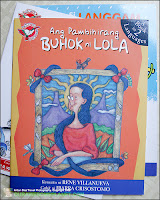 Rene Villanueva's Ang Pambihirang Buhok ni Lola tells of a town's legendary lola who had hair of extraordinary length and strength, which she used to save her barrio from a strong storm. It then connects lola's courage and character as to why we have exceptional Filipinas like Gabriela Silang. This text resists stereotypical descriptions of women's hair and how it is often just confined to "trivial" aspects like color and style. Here, a woman's hair is assigned "masculine" characteristics (i.e. strong) and given purpose, and a very important one at that. Oh, hindi ba, mahaba talaga ang hair ng Pinay!
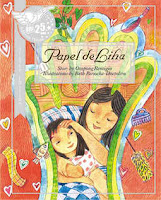 Ompong Remigio's Papel de Liha was so well-received that it published a silver edition of the story. Here we see a housewife who does all the chores (typical image) including fixing pots and pans! But unlike your regular housewife/mega mom story, this text presents the reality of such a task: Her hands get rough and calloused because of all the work. Hence, the title which literally means "sandpaper" and was a bit controversial because the image it brings isn't exactly positive. In the story, the child overhears her aunt scolding her mother and telling her that her father will stop holding her mother's hands if they get too rough. Upon getting sick, and noticing that her mother's hands really were rough, the child also concludes that while her mother's hands are not smooth and perfect, they have the power to heal and care and love. The story ends with her father holding her mother's hands.
 Kerima Polotan's The Virgin features a middle-aged woman working at a placement agency, putting her at some sort of position of power over applicants. Her speech differs from Robin Lakoff's "Woman's Language," as it is aggressive and is not concerned with matters of politeness. This story also recognizes the feminine sexual desire, and views virginity as something "undesired" to a certain point. Miss Mijares, never touched by a man, often wonders how it's like. She blames her being a spinster on being obliged to take care of her parents, a common practice in our culture. She thinks that they "took too long to die," challenging oriental views and simply expressing what it really feels to have been "deprived" of youthful pleasures. It ends with a sexual encounter with one of the applicants she was attracted to in the agency, and a feminist stylistic analysis of the ending (which I did for my English 120: Stylistics class) would also reveal how she was able do this with surprising control and power. Judging by how she affected the other character using Hallidean processes, the scene was anything but pathetic. The act, in fact, empowered her. Published in 1952, this was seen as something disturbing at the time, perhaps because the point of view presented challenged what was traditional and Maria Clara-ish. Nevertheless, it gives its readers access to an old maid's thoughts and experiences.
 Rene Villanueva's Ang Pambihirang Buhok ni Lola tells of a town's legendary lola who had hair of extraordinary length and strength, which she used to save her barrio from a strong storm. It then connects lola's courage and character as to why we have exceptional Filipinas like Gabriela Silang. This text resists stereotypical descriptions of women's hair and how it is often just confined to "trivial" aspects like color and style. Here, a woman's hair is assigned "masculine" characteristics (i.e. strong) and given purpose, and a very important one at that. Oh, hindi ba, mahaba talaga ang hair ng Pinay!
 Ompong Remigio's Papel de Liha was so well-received that it published a silver edition of the story. Here we see a housewife who does all the chores (typical image) including fixing pots and pans! But unlike your regular housewife/mega mom story, this text presents the reality of such a task: Her hands get rough and calloused because of all the work. Hence, the title which literally means "sandpaper" and was a bit controversial because the image it brings isn't exactly positive. In the story, the child overhears her aunt scolding her mother and telling her that her father will stop holding her mother's hands if they get too rough. Upon getting sick, and noticing that her mother's hands really were rough, the child also concludes that while her mother's hands are not smooth and perfect, they have the power to heal and care and love. The story ends with her father holding her mother's hands.
Now that we have images of a lola and a nanay, let's go to a generally devalued image in our society: a manang.
 Kerima Polotan's The Virgin features a middle-aged woman working at a placement agency, putting her at some sort of position of power over applicants. Her speech differs from Robin Lakoff's "Woman's Language," as it is aggressive and is not concerned with matters of politeness. This story also recognizes the feminine sexual desire, and views virginity as something "undesired" to a certain point. Miss Mijares, never touched by a man, often wonders how it's like. She blames her being a spinster on being obliged to take care of her parents, a common practice in our culture. She thinks that they "took too long to die," challenging oriental views and simply expressing what it really feels to have been "deprived" of youthful pleasures. It ends with a sexual encounter with one of the applicants she was attracted to in the agency, and a feminist stylistic analysis of the ending (which I did for my English 120: Stylistics class) would also reveal how she was able do this with surprising control and power. Judging by how she affected the other character using Hallidean processes, the scene was anything but pathetic. The act, in fact, empowered her. Published in 1952, this was seen as something disturbing at the time, perhaps because the point of view presented challenged what was traditional and Maria Clara-ish. Nevertheless, it gives its readers access to an old maid's thoughts and experiences.
Speaking of Maria Clara, here is another female character which would put Rizal's character to shame: Zafira, from Francisco Balagtas' komedya titled Orosman at Zafira. Because of Orosman's minimal role in the play, some even suggest that it should've only been titled Zafira instead! I watched the Dulaan UP's version of the said komedya and I must say that awesome is an understatement. Hang on. IT WAS AWESOME.
 |
| If they show this again next year, you better watch it! |
Considered a revolutionary feminist work, Balagtas' work features Zafira as the daughter of a sultan. After the assassination of her father by a competing tribe (Tedenst), she avenges his death and leads her own tribe (Marruecos) to battle, along with another dominant female character, Gulnara and the Duquela tribe. In a culture where women only serve either as slaves or wives, the other "sultan" scoffs her for attempting to do so. Zafira remains brave even after losing the first war, and tries again. She eventually wins, but the story ends with her lamenting over the destructive nature of man's never-ending hunger for power.
And that's 1850s for you, in pure, makata, nosebleed Filipino taking your breath away and thinking, "You go, girl!"
Subscribe to:
Posts (Atom)